
Neuroplasticity and the Art of Becoming: How Your Brain Rewires Your Life From the Inside Out
The Moment You Realize You Are Not Fixed
There is a quiet, almost sacred moment in every person’s life when they finally understand that change isn’t something that “happens to” them — it’s something that begins within them.
It’s the moment you recognise that your habits aren’t your identity…
Your fears aren’t your destiny…
And your past is not a prophecy.
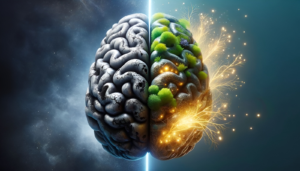
The science that explains this truth has a name: neuroplasticity — the brain’s innate ability to reorganize itself, create new neural pathways, and reshape old ones.
But neuroplasticity isn’t only biology.
It is the art of becoming — the bridge between who you are today and who you can choose to become.
What Exactly Is Neuroplasticity? (In Human Language)
Neuroplasticity refers to the brain’s capacity to change its structure and function in response to experience, thought, learning, emotion, and behaviour.
This isn’t philosophy — it’s measurable science.
Studies from the past two decades overturned the old belief that the adult brain was “fixed.”
Key research:
- Michael Merzenich, often called “the father of neuroplasticity,” demonstrated that the adult brain can reorganize itself like clay, not concrete (Merzenich, 2004).
- Eleanor Maguire’s famous study of London taxi drivers showed measurable growth in the hippocampus—the memory/navigation centre—through repeated mental use (Maguire et al., 2000).
- Norman Doidge popularised the concept through real-world clinical cases where stroke patients relearned lost functions (Doidge, 2007).
In simple terms:
What you repeat, you become.
What you focus on, grows.
What you emotionally energize, wires deeply.
Your Future Self Is Built One Neural Pathway at a Time
Every action, thought, emotion, and pattern you repeat strengthens a specific network in the brain — like a footpath deepening into a road.
Your brain doesn’t ask:
“Is this good for you?”
It only asks:
“Is this familiar?”
This is why limiting beliefs feel “natural.”
They’ve simply been practiced.
But here’s the liberating truth:
**Anything practiced can be un-practiced.
Anything wired can be rewired.
Anything learned can be unlearned.
Neuroplasticity is the ultimate permission slip.
The Spiritual Side of Neuroplasticity: Becoming the Inner Artist
Ancient philosophies have been saying what neuroscience is now proving:
- “What you think, you become.” — Buddha
- “As a man thinketh in his heart, so is he.” — Proverbs
- “We are shaped by our thoughts; we become what we think.” — Dhammapada
Where spirituality speaks in metaphor, neuroscience speaks in mechanism.
The overlap is profound:
Your internal world shapes your lived reality.
Your repeated thoughts sculpt your neural architecture.
Your emotions energize the pathways you keep.
In both science and spirit, becoming is an inside job.
How Neuroplasticity Shapes Identity: The “Default Self” Is Not Final
Identity is often treated as something inherited or fixed — personality traits, emotional habits, belief systems, patterns of reaction.
But identity is not a structure.
It is a network.
A dynamic, malleable, ever-shifting network of:
- beliefs
- memories
- emotional patterns
- interpretations
- coping strategies
- repeated thoughts
Your “self” is not a stone sculpture.
It is an evolving mosaic.
When you begin to work with neuroplasticity consciously, you stop living as a reflection of your past and start living as a construction of your intention.
” Ready for an Instant Calm? Get the 2-Minute Vagus Nerve Hack Free! ”
The Art of Becoming: A Practice for Rewiring Your Mind
To activate neuroplasticity, three elements matter most:
1. Focused Attention
Neurons fire when attention is present.
Where attention goes, plasticity flows.
2. Emotional Intensity
Emotion marks a moment as important.
It tells the brain:
“Save this. Wire this.”
This is why trauma wires deeply —
and why joy, gratitude, and possibility can rewire deeply too.
3. Repetition
Not forced repetition —
conscious, intentional rehearsal.
The brain learns through iterations, not single events.
A 5-Minute Daily Rewiring Ritual
This exercise rewires limiting identity patterns and builds new ones.
Step 1 — Name the Old Pattern
Identify a pattern that no longer belongs to your becoming.
Example:
“I avoid opportunities because I fear I’m not ready.”
Step 2 — Label It Gently
Say:
“That’s an old pathway, not my truth.”
This activates the prefrontal cortex and reduces amygdala reactivity (Ochsner et al., 2004).
Step 3 — Create the New Identity Statement
Not an affirmation — an identity anchor.
“I am becoming someone who trusts their readiness.”
Step 4 — Feel the Emotional Reality of It
Emotion + imagination = plasticity.
Step 5 — Rehearse for 60–90 seconds
Envision yourself acting from the new identity in a real scenario.
This activates the brain’s mirror neuron system, strengthening readiness and behavioural preparedness.
Repeat daily.
Small inner shifts transform outer reality.
“This long-term rewiring process is built on a calm foundation. You can instantly start this journey by mastering the 3 scientific steps for Vagus Nerve activation.
“https://createwiththoughts.com/vagus-nerve-hack
Becoming Is an Ongoing, Beautiful Process
Neuroplasticity is proof that:
You are not stuck.
You are not fixed.
You are not defined by who you’ve been.
You are a living, breathing, rewiring work of art.
The brain that wakes up with you tomorrow
is not the brain you have today.
The question is not:
“Can I change?”
The question is:
“What am I becoming?”
References & Suggested Reading
- Doidge, N. (2007). The Brain That Changes Itself. Penguin.
- Merzenich, M. (2004). “Cortical Plasticity Contributing to Child Development.” Brain & Development.
- Maguire, E. A. et al. (2000). “Navigation-related structural change in the hippocampi of taxi drivers.” Proceedings of the National Academy of Sciences.
- Ochsner, K. N. & Gross, J. J. (2004). “Cognitive control of emotion.” Trends in Cognitive Sciences.
- Kandel, E. R. (2006). In Search of Memory. W.W. Norton.
If this post resonated with you, I’d love to hear from you: What aspect of your identity are you ready to rewrite? For me, I recently decided to let go of the belief that I’m ‘not creative enough’—and it’s opened new ways of thinking and doing. Vulnerability is powerful, so feel free to share your own experience in the comments below.
👇 Add your thoughts in the comments.
🔄 Know someone who could use a reminder of their potential? Please forward this post to them.
🧠 Subscribe to the newsletter for weekly actionable tips and science-backed insights on personal growth, neuroplasticity, and conscious transformation—so you can put the latest research into practice and see real change in your life.