

Introduction: The Powerful 8 Hours
You spend roughly one-third of your life asleep. What if those eight hours weren’t just for physical rest, but for intentional, profound mental transformation? Imagine waking up each morning with new, empowering beliefs gently installed into your subconscious, simply because you harnessed the power of your sleep cycle.
Most people know the subconscious mind controls 95% of our daily decisions, habits, and beliefs. But trying to change these beliefs during the day can feel like fighting an uphill battle—your conscious mind is constantly filtering and doubting new ideas. What if you could bypass this filter when it’s naturally off guard—while you are sleeping.
This post will show you exactly how to reprogram your subconscious mind while sleeping using a simple, three-step “Night Command.” This method leverages specific brainwave states, backed by neuroscience, to install new, powerful beliefs effortlessly.
The Scientific Window: Why Sleep is the Key
Why can we reprogram the subconscious mind while sleeping but struggle during the day? The answer lies in your brainwave states, and neuroscience has begun to shed light on these fascinating transitions.
When you are awake, your brain is typically in Beta waves—a fast, alert, and logical state. This state is responsible for filtering information and is sceptical of change. To access the subconscious, you need slower, deeper states.
Researchers have found that these slower brainwaves create a more suggestible mental environment, ideal for subconscious reprogramming. For example, a study published in Frontiers in Human Neuroscience demonstrated that theta wave activity is strongly linked to increased hypnotic suggestibility and learning capacity, especially during transitions into and out of sleep.
This study explores how hypnotic suggestion and theta activity are interlinked during sleep transitions, supporting the notion of increased suggestibility and learning capacity in these brainwave states.
Accessing the Hypnotic Window: Theta and Delta
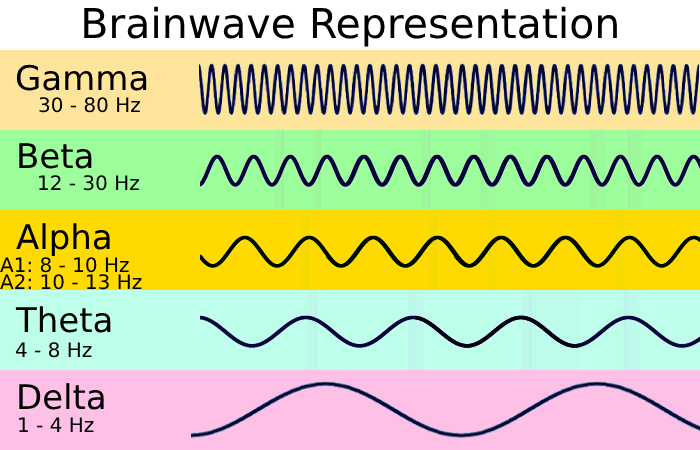
Image by Bondigoldwiki, CC0, via Wikimedia Commons
During the transition into and out of sleep, your brain shifts into two key states:
- Theta Waves: This is the ideal state for deep programming. It’s the brainwave state most associated with deep meditation, REM sleep, and the relaxed focus often seen in children. Your mind is highly receptive, almost hypnotic, in Theta.
- Delta Waves: This is your deepest, slowest sleep state, primarily for healing and physical repair. While essential, the programming window narrows here, as the mind is less conscious of external input.
The goal of the Night Command is to install your new beliefs during the crucial Theta state, just as you drift off. This window is your secret weapon for effortless change.
The Night Command: A 3-Step Reprogramming Method
This method is designed to override old, limiting software and upload new, empowering code directly to your subconscious operating system. Whether you seek more confidence, abundance, or peace, this structured approach can help.
1. Pre-Sleep Priming: The 5-Minute Setup
Before you even get into bed, you must prepare the ground for your new programming. Start with a simple yet powerful exercise:
- Journal a Single Belief: Identify one specific limiting belief you want to dissolve (e.g., “I am not worthy of success”). Now, reframe it into a powerful, present-tense, positive affirmation (e.g., “I am worthy of success and abundance flows to me easily”).
- Try it with other common beliefs:
- “I am not good enough” → “I am capable and resilient.”
- “I always fail” → “Success comes naturally to me.”
- “I’ll never be healthy” → “My body is strong and healing every day.”
- “I am unlovable” → “I am innately valuable and deserving of love.”
By customising these affirmations to your own journey, you make them more believable and powerful.
- Emotional Charge: Read your new affirmation out loud three times. As you say it, visualise the feeling of having that belief already solidified in your life. What would change for you tomorrow if this were true? Emotion is the language of the subconscious.
- Avoid Screens: Shut down all screens (phone, TV, tablet) at least 20 minutes before performing the command. Blue light from screens keeps your brain in fast Beta waves, making it harder to access more receptive states. Studies have shown that reducing screen time before bed improves sleep quality and eases the shift into Theta.
https://sleepeducation.org/screen-time-and-sleep-what-new-studies-reveal
2. The Theta State Command: Installation
This step is performed after you get into bed and before you fall asleep. It’s your chance to install your chosen belief while the mind is most receptive.
- Slowing the Breath – Entering the Theta State: Begin by closing your eyes and deliberately slowing your breathing—aim for a rhythm such as four seconds inhaling and six seconds exhaling.
Scientific research has demonstrated that slow, deep breathing helps shift the brain from the rapid Beta waves of wakefulness into the slower Theta waves typically experienced during the transition to sleep and deep relaxation.
The Theta state (4–8 Hz) is particularly important because studies show it is associated with heightened suggestibility and neural plasticity, allowing new beliefs to be more readily accepted by the subconscious mind
- The Repeated Command – Encoding Your Affirmation: As your breathing calms and your mind becomes quieter, start to internally repeat your positive affirmation (for example, “I am worthy of success and abundance flows to me easily”).
Repetition in the Theta state is key, as this brainwave frequency enhances the brain’s ability to form new neural pathways.
The more vividly you imagine and feel the truth of your affirmation, the more effectively it is ‘installed’ into your subconscious. Neuroscientific evidence suggests that such mental rehearsal, when performed during Theta, can lead to measurable changes in both thought patterns and behaviour.
- The Last Thought – Planting the Seed for Change: Continue repeating your chosen affirmation for 5–10 minutes, or until you feel yourself drifting towards sleep.
Aim for your affirmation to be the very last thought before you lose consciousness. Neuroscience indicates that the period just before sleep—when the brain is rich in Theta activity—is when the mind is most receptive to suggestion and belief change.
Think of this moment as planting a seed: the final message you send to your subconscious is likely to be reinforced and replayed during sleep, strengthening its impact by morning.
3. Waking Integration: Sealing the New Belief

Upon waking, your brain again passes briefly through the Theta state before reaching the alert Beta state. This transition offers a scientifically supported window for subconscious programming.
- The First Thought: As soon as you become aware in the morning, immediately repeat the Night Command affirmation from the night before. This ensures the new belief is reinforced before old thought patterns can reassert themselves. If possible, place a reminder (such as a note by your bed) to prompt this action.
- Journal the Result: Spend two minutes writing about or reflecting on how it feels to embody this new belief. Acknowledge any emotional shifts or new perspectives. This process of journaling helps anchor the belief in your conscious mind and further strengthens the new neural pathways.
Dissolving Common Limiting Beliefs
The Night Command technique is especially effective for deep-seated beliefs around:
- Self-Worth: I am innately valuable and deserving of love.
- Money: Money is a tool that flows easily and freely into my life.
- Health: My body is intelligent, resilient, and healing perfectly right now.
The key is consistency. As noted above, using the Night Command for at least 30 nights helps establish new neural networks, making your desired belief the default setting for your subconscious mind.
Why Nervous System Stabilisation Matters
For subconscious reprogramming to be truly effective, your nervous system must be calm and balanced. Stress and anxiety activate the body’s “fight-or-flight” response, making it harder for new beliefs to take root—even during receptive Theta states.
Stabilising your nervous system increases receptivity to subconscious programming and supports overall well-being.
Mastering how to reprogram your subconscious mind while sleeping is one of the most impactful steps you can take for personal transformation. However, the foundation of lasting change is a stable, regulated nervous system.
To support your journey, download the Vagus Nerve Hack guide now—and give yourself the biological support needed to make new beliefs your reality. Calm your body, open your mind, and watch as transformation unfolds—even as you sleep.
The Vagus Nerve Hack: 3 Scientific Steps to Instant Calm is a free, practical guide designed to help you quickly shift from “fight-or-flight” to a state of deep relaxation. The vagus nerve plays a crucial role in regulating your body’s stress response and supporting the calm, open state needed for effective subconscious work. By following this guide, you’ll prime your entire nervous system, making the Night Command and other reprogramming techniques even more powerful.
References:
Cordi, M. J., Schlarb, A. A., & Rasch, B. (2014). Deepening sleep by hypnotic suggestion. Frontiers in Human Neuroscience, 8, 424. (https://pmc.ncbi.nlm.nih.gov/articles/PMC4015388/)
Jensen, M. P., Adachi, T., & Hakimian, S. (2015). “Therapeutic Hypnosis, Neurophysiology, and Brain Connectivity: A Review.” American Journal of Clinical Hypnosis, 57(3), 285–313.
Gruzelier, J.H., “EEG-neurofeedback for optimising performance. I: A review of cognitive and affective outcome in healthy participants,” Neuroscience & Biobehavioural Reviews, 2014
Kross, E. et al., “Self-Talk as a Regulatory Mechanism: How You Do It Matters,” Journal of Personality and Social Psychology, 2014).